
Production of Germanium and Gallium From Coal-Based Byproducts
Why Germanium and Gallium Matter
Germanium and gallium are very important elements used in advanced electronics, optoelectronics, fiber optics, solar cells, computer chips, and other applications. The elements are of great economic importance to the US and pose a supply security risk and thus are classified as critical. The US is dependent upon imports for 100 % gallium and >50% of germanium.
Technology
Microbeam utilizes a pyrometallurgical process to separate germanium (Ge) and gallium (Ga) from coal derived fly ash. Microbeam has been working with combustion and gasification facilities since 1992 and has extensive experience in understanding the fate of ash-forming materials and their impacts on plant performance. Microbeam identified the potential for this technology during a project with a commercial gasification plant and pursued funding from the National Science Foundation (NSF)[1] to understand the key mechanisms and operating parameters to selectively recover Ge from fly ash.
Products
Microbeam’s technologies will look to provide a variety of products based on customer needs. The concentrates produced by the extraction process are expected to be >60% Ga and Ge in their respective processes. Those concentrates will be further processed and refined to produce final products including:
GeO2 – optical fibers, infrared optics, lenses, semiconductors, etc.
High purity Ge metal (99.999%+) – gamma-ray & x-ray detectors, fiber & infrared optics, semiconductors, solar cells, alloys, etc.
High purity Ga metal (99.999%+) – semiconductors, solar cells, medical applications, alloys, etc.
In addition to Ga and Ge products, the separation products are expected that include Antimony.
Antimony – flame retardants, lead-acid batteries, metal alloys, semiconductors, ammunition, etc.
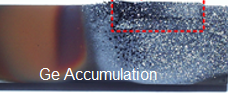
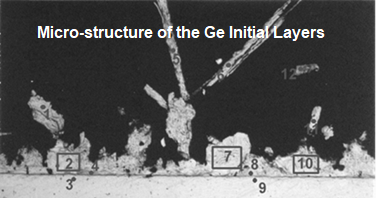
This effort received a follow-on NSF Phase II award and had the potential to be commercialized in the early 2000s, however, the entity that Microbeam was working with changed their feedstock from coal to petroleum products and the Ge market in the US moved oversees. As the need for domestic production of Ge has grown, Microbeam has been able to further develop and demonstrate this technology through Department of Energy (DoE) and Department of War (DoW) funding opportunities.
Microbeam has adapted the Ge from coal ash technology to the separation and concentration of Ge and Ga from mixed rare earth element (REE) concentrates (MREC). Over the past 10+ years, Microbeam has worked with the University of North Dakota in their efforts to develop and demonstrate their technology to produce MREC from coal feedstocks. Their technology has been scaled and demonstrated at pilot-scale. Microbeam identified the opportunity to use its Ge separation technology to separate and concentrate Ge and Ga from the MREC produced by Microbeam’s process.
Microbeam will utilize commercially available processing and refining approaches to refine the Ge and Ga products based on customer needs.
Competitive Advantage
Based on early techno-economic assessments, Microbeam expects to be able to produce Ge (GeO2 and Ge metal) and Ga (metal) at costs lower than historically observed market prices for these products. That gives this technology the advantage of being able to remain profitable should commodity prices decrease with increases in supply or foreign market adjustments.
Microbeam has been working with coal mines and utilities for over 30 years to help identify the impacts of fuel impurities on plant performance. Through these efforts, Microbeam has identified concentrations and relationships between critical minerals (CM) (including REEs, Ga, and Ga) and distributions in coal-derived feedstocks. Microbeam’s understanding of the combustion and gasification processes gives Microbeam an advantage over similar technologies as Microbeam understands what process parameters upstream of the separation process can be made to significantly increase levels of of Ge and Ga in in concentrates derived from MREC and fly ash.
Microbeam’s long history of working with mines and utilities throughout the United States has established strong relationships with potential clients, commercialization partners, and stakeholders across the domestic supply chain, from feedstock production and processing through refining and end use.
Funding
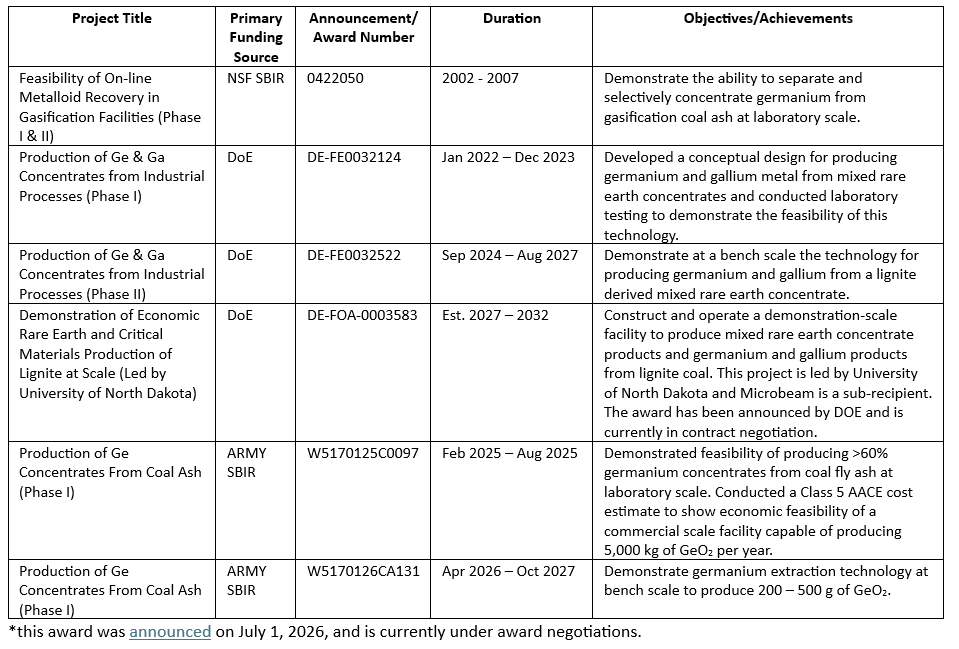



Products Project Partners
Microbeam works with and receives support from the full supply chain from mining to refining on current projects.
Government
- Department of Energy
- Department of War
o Army C5ISR
State
- North Dakota Industrial Commission
Industry
- North American Coal Corporation – coal mining
- BNI Energy – coal mining
- Rainbow Energy Center – ash producer (power plant)
- Great River Energy – ash producer (power plant)
- 5N+ - Ga and Ge consumer (semiconductor and solar cell manufacturer)
- Lattice Materials – Ge consumer
- Barr Engineering – Engineering support
Academia
- University of North Dakota
Supporting Efforts
In addition to the Ga and Ge separation technology, Microbeam works with supply chain partners to identify and increase the Ga and Ge concentrations within the process feedstocks.
Exploration
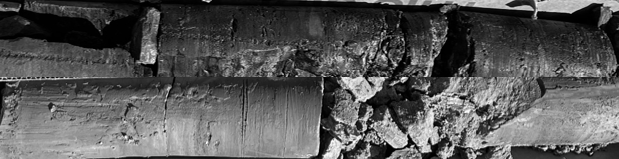
Microbeam has been working with the mining industry to conduct annual exploration activities to identify regions with high concentrations of REE, Ga, and Ge. These efforts include drilling, coring, sample collection and preparation, compositional analysis (internal and external), and resource modeling.
Detection
Microbeam has developed patented methodologies for identifying REE and CM in coal-based feedstocks using commercially available analyzers and sensors. This REE-CM estimation algorithms can be applied to downhole e-logging, on-belt analyzers (full stream elemental analyzers), and X-ray fluorescence.
These detection capabilities have been applied to exploration activities (downhole logging and drill core analysis) to provide a more detailed analysis of the resource and to provide near-real time estimations of REE-CM concentrations. This improves decision making during exploration and provides more granular results for resource modeling.
Sorting
The detection technologies can be applied to provide sorting capabilities of coal-based feedstocks. On-belt analyzers can measure the REE-CM concentrations and downstream sorting gates can be used to separate the feedstock based on the estimated measurements.
What’s next?
Microbeam is currently demonstrating the Ge and Ga pyrometallurgical processes at bench/pilot-scale. These operations will look to provide kilograms of Ge and Ga concentrate, oxides, and pure metals for verification by downstream partners.
The demonstration-scale technology will look to demonstrate the Ge and Ga separation from MREC at scale. Microbeam is actively pursuing opportunities to construct a pilot/small-scale commercial facility to demonstration the Ge separation from coal ash.
The long-term vision for Microbeam with respect to the Ge and Ga technology is to design a modular system that can be adapted to various coal combustion and gasification facilities. These systems will look to be directly integrated into the existing plants to minimize utility and waste management needs. These systems can be owned and operated by Microbeam or by the plant themselves through licensing agreements.
[1] Microbeam Technologies Inc, NSF SBIR Phase II: Feasibility of On-line Metalloid Recovery in Gasification Systems, NSF Award Number: 0422050, Final Report, July 31, 2007